
Rio Tinto: From Nested S3 Paths to Databricks Gold
The Client
Rio Tinto is a leading global mining group that focuses on finding, mining and processing the Earth's mineral resources. Rio Tinto has started a programme of work to Ingest and Provision Geo Scientific data for Rio Tinto Exploration (RTX). This includes data of many forms such as spectral and image data and comes from a myriad of sources such as devices, aircraft, third party APIs, databases, and internal apps.
The Challenge
Mechanical Rock were engaged to build a solution that takes images from a third party repository and replicates these in the central data platform of choice, in this case Databricks. The current solution architecture uses patterns defined from a centralised team. Features include ingestion, and processing within AWS plus Databricks, for storage and analytics, including AI/ML workloads using Sagemaker. The data was not required to be realtime, but that there is a faithful replication of all data in the third party repository in the data platform at least once daily.
The Solution
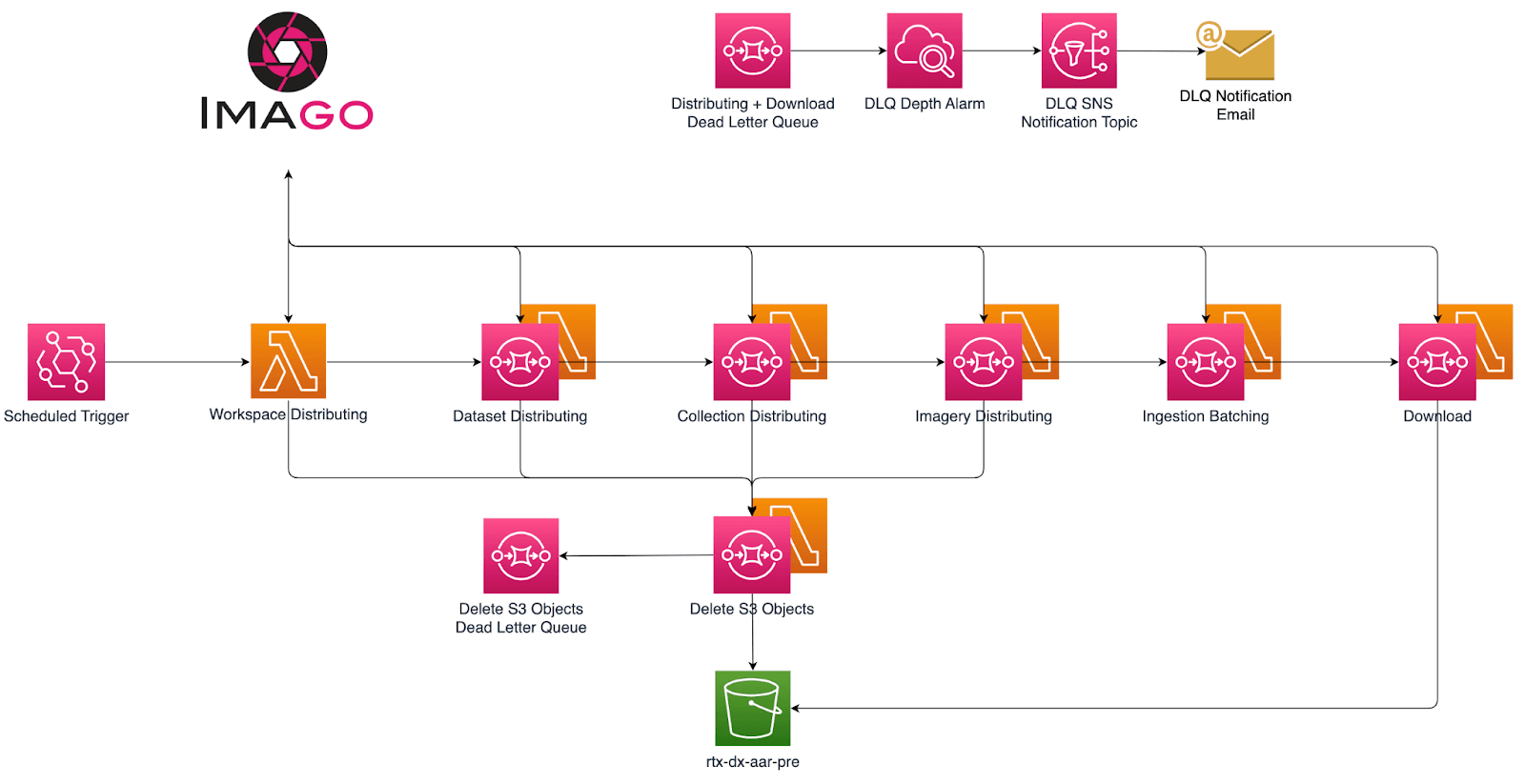
Running daily, the application reaches out to the third party API, while operating within the environmental constraints set by Rio Tinto and only affects changes since the previous run. AWS Lambdas were chosen as the primary compute mechanism to enable horizontal scaling and AWS Queues allow failed messages to be retried and upon three failed attempts. The message is sent to a Dead-Letter-Queue alongside a notification to a human user to resolve the failing process. AWS Eventbridge is used to schedule and initiate the ingestion process. The ingestion process constructs a hierarchy to determine how to optimally batch and download images.
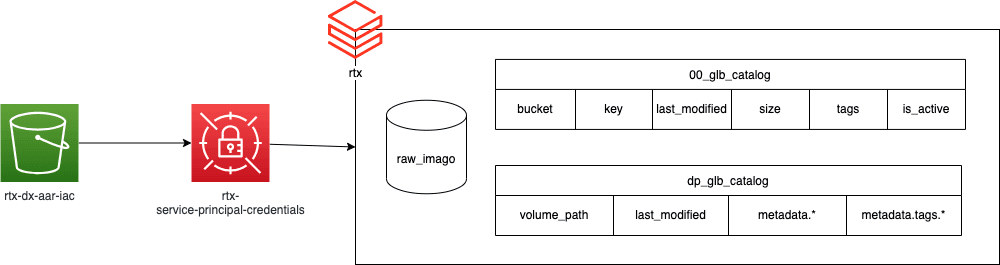
To make Imago data in S3 more generally available to consumers Mechanical Rock built a catalogue of Imago metadata, in Databricks.
The Benefits
The data from the third party repository is now available, and updated daily, in a central data platform at Rio Tinto. This can now be used as a single point of access for data products for any customers at Rio Tinto. Furthermore, this was the first use case for Databricks at RTX and has provided a template for future data ingestion that can be utilised for other data sources, underpinned with robust software engineering process to ensure quality and repeatability.
More from our work

Data Platforms
MercyCare: Turning "best-effort" reporting into a trusted, governed data foundation
MercyCare replaced manual quarterly care-minute reporting with a governed Snowflake data platform built with Mechanical Rock for real-time, trusted data.


Product Development
Rio Tinto: Accelerating rail maintenance data processing with the RSM Scanner
Rio Tinto engaged Mechanical Rock to automate and accelerate the processing of paper-based maintenance work pack data using AI/ML learning, unlock data from historical archives and design a solution to meet their future data processing needs.

Data Platforms
Mineral Resources: Databricks Lakehouse Implementation
Building a Unified and Scalable Data Platform to Empower Enterprise Analytics and AI at scale.