
Fortescue: Modern data strategy
The Client
As a top tier resources company, our client uses data as a key enabler of operational and business performance.
They've invested in a modern cloud-based data warehouse and tooling to speed the flow of value.
However demand is outstripping the capacity of their service and is continuing to grow as operational business units find new opportunities and mature their own data products.
This is a pattern that is repeated across the industry – the uptake on successful data platforms exceeds the economic sustainability of supporting it via a traditional centralised team.
According to McKinsey, only about 7% of Australian organisations are effective at reaching their primary objectives on data.

The Challenge
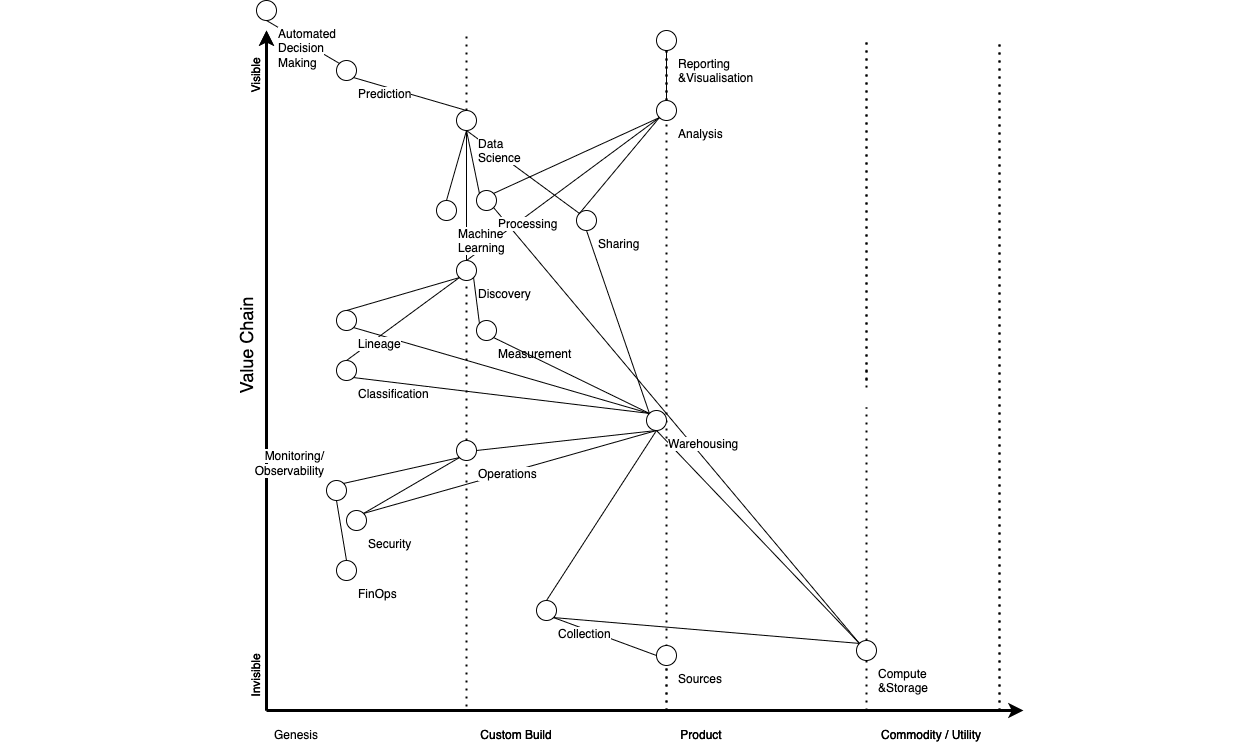
Currently, much of the data infrastructure depends on manual processes that are not repeatable and subject to error.
- Provisioning of resources uses some scripting but still relies on manual configuration changes in the console.
- Administration of users, data and access is manual rather than using code driven access patterns.
- Security policy is implemented manually with inconsistent results.
- While business teams are becoming self sufficient, the sprawl of data patterns and sources is becoming unmanageable, affecting discoverability, compliance and reliability.
The Solution
Our solution recommended a complete strategy to enable data agility and unlock the flow of value in the organisation :
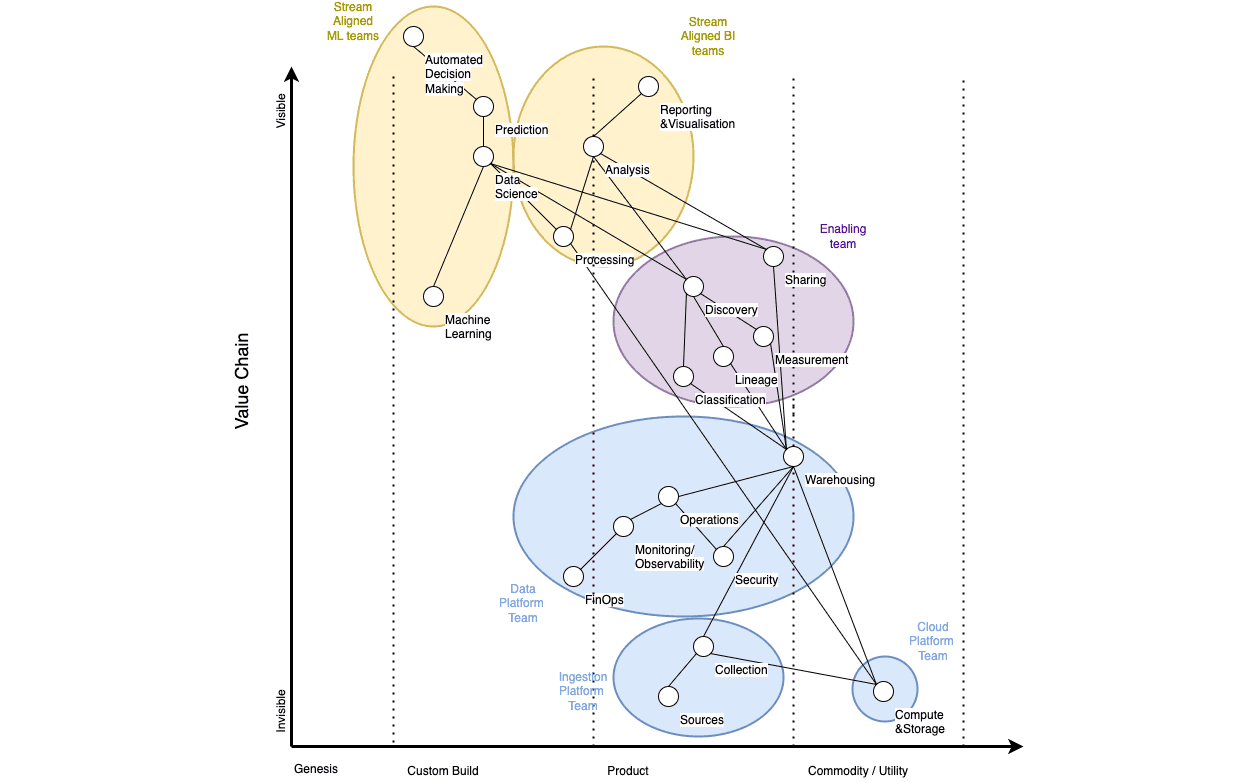
- Domain Driven or Data Mesh architecture.
- Automated DevOps pipelines for Infrastructure-as-Code management.
- Better compliance through policies-as- code, applied at the domain level.
- Organisational design based on Team Topologies platform, stream-aligned and enabling teams.
The enabler to move to higher levels of service is to employ modern software engineering techniques (DevOps/DataOps) to automate processes across the data value chain.
The Benefits
Our client’s data platform will be able to scale to accommodate the projected future growth of its operational business.
- The Total Cost of Ownership (TCO) for the data platform should be reduced as processes and services are optimised.
- Automation makes processes scalable, repeatable and reliable.
- A successful platform allows seamless self service for consumers (no more service tickets).
- Self service reduces waiting time and allows business customers to iterate problems quickly.
- Speed of iteration leads to better experiments and the delivery of real business value from data driven decisions.
More from our work

Data Platforms
MercyCare: Turning "best-effort" reporting into a trusted, governed data foundation
MercyCare replaced manual quarterly care-minute reporting with a governed Snowflake data platform built with Mechanical Rock for real-time, trusted data.


Product Development
Rio Tinto: Accelerating rail maintenance data processing with the RSM Scanner
Rio Tinto engaged Mechanical Rock to automate and accelerate the processing of paper-based maintenance work pack data using AI/ML learning, unlock data from historical archives and design a solution to meet their future data processing needs.

Data Platforms
Mineral Resources: Databricks Lakehouse Implementation
Building a Unified and Scalable Data Platform to Empower Enterprise Analytics and AI at scale.